

Take Action: We just launched our 2026 State of GTM AI survey. We want to know how GTM leaders in Sales, Marketing, Sales Development, and RevOps are leveraging AI today.
Pipeline is so vexing right now that I went hunting for the person getting it right, with AI and humans working together. Almost everyone I asked pointed me to Jordan Crawford, founder of Blueprint. A few dozen of his videos later, we brought him to Scale Venture Partners’ Pipeline Council.
Jordan has been building go-to-market systems since 2020, “since we had to use our bare hands to do work,” as he put it. Today all of that work runs through Claude Code and Codex.
He opened with a problem everyone in sales recognizes: Cold email reply rates keep falling, because AI agents now run the same playbook SDRs used to run: pound the phones, send the emails, use surface-level “personalization,” talk about your own company. Not a shock that this tactic is losing effectiveness.
The root cause of this plummet, in Jordan’s view, is that most teams aren’t grounded in the daily problems of their customers.
Here are five things he’d have you do, with AI in the loop and the human touch intact, to give your pipeline a pulse again.
1. Rank your sources: customer actions, customer words, then the CRM
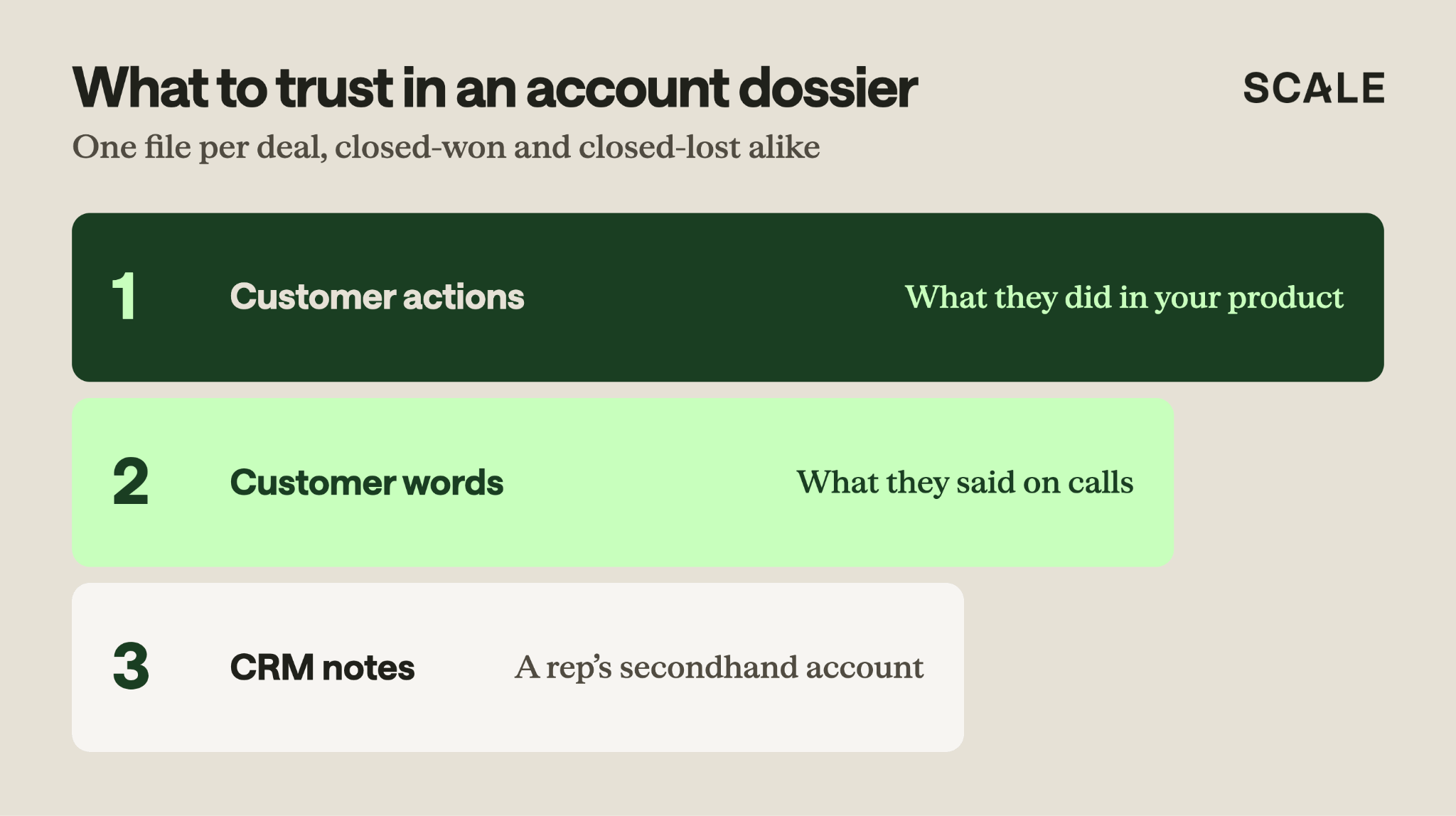
Build an account dossier for every deal, one file per deal, closed-won and closed-lost alike. Looking only at wins is survivorship bias. Inside each dossier, trust what actions your customer took in your product most, then what they said on calls. CRM notes come last because they’re a rep’s secondhand account.
Push the dossiers to a shared GitHub repo so your GTM knowledge lives in one place, the way product code does. The models will get things wrong, and every correction needs to stick. “If your team just exists in a bunch of chats or their own Claude Code session, there is no chance for compounding intelligence,” Jordan says.
2. Segment, then reverse-engineer your 10X customers
Group prospects by the situation they’re in and the pain of that situation. Jordan’s example: a manufacturer that crosses 50 employees across two states has to file reports with a stack of state agencies, which takes about 100 hours without an HR platform. That’s a specific problem you can address in your outreach.
Within a segment, have Claude sort deals into three buckets: closed-won, closed-lost, and your 10X customers, the ones who would privately say, “I’m stealing from you,” at $100,000 a year. Then ask: how could we have known which bucket someone belonged in before they came inbound? Get it to qualify (when should we sell to this account, and when shouldn’t we?) and quantify (what makes someone a 5X, 10X, or 100X customer?).
3. Find the data your customer would steal
Jordan once asked the founder of an ERP for plastics manufacturers what he knew that his customers didn’t. Resin is 80% of their spend, the founder said, and he knew the price of resin five days before anyone else. Jordan’s advice: send them that number.
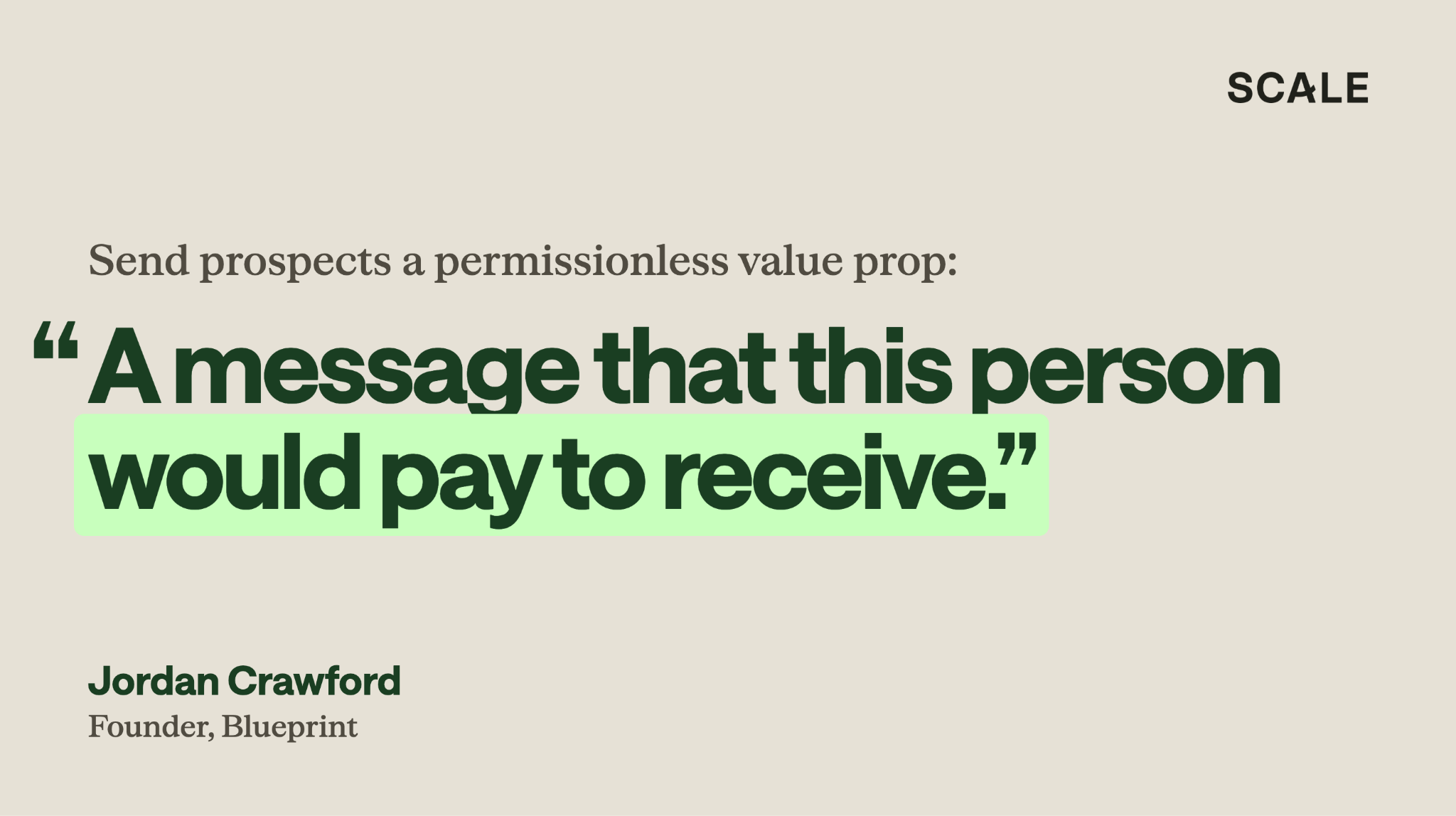
Ask yourself what your best customer would take if they broke into your office. Aggregate and anonymize that data, then put it in front of them. Jordan calls the result a PVP, or permissionless value prop: “a message that this person would pay to receive,” useful even if they never buy.
4. Leaders build the list and the message. Reps run it
Companies hire a rep fresh out of college and say, “figure out who to target and what to say, and you have three months to prove yourself.” Jordan called that “a ridiculous thing to ask.” Building the target list and the messaging is the sales leader’s job. Treat reps as your customers: tell them the first version will be rough, since Claude made hundreds of choices to build it, and fix the list and message based on what they report back.
5. Pay your first rep for learning speed
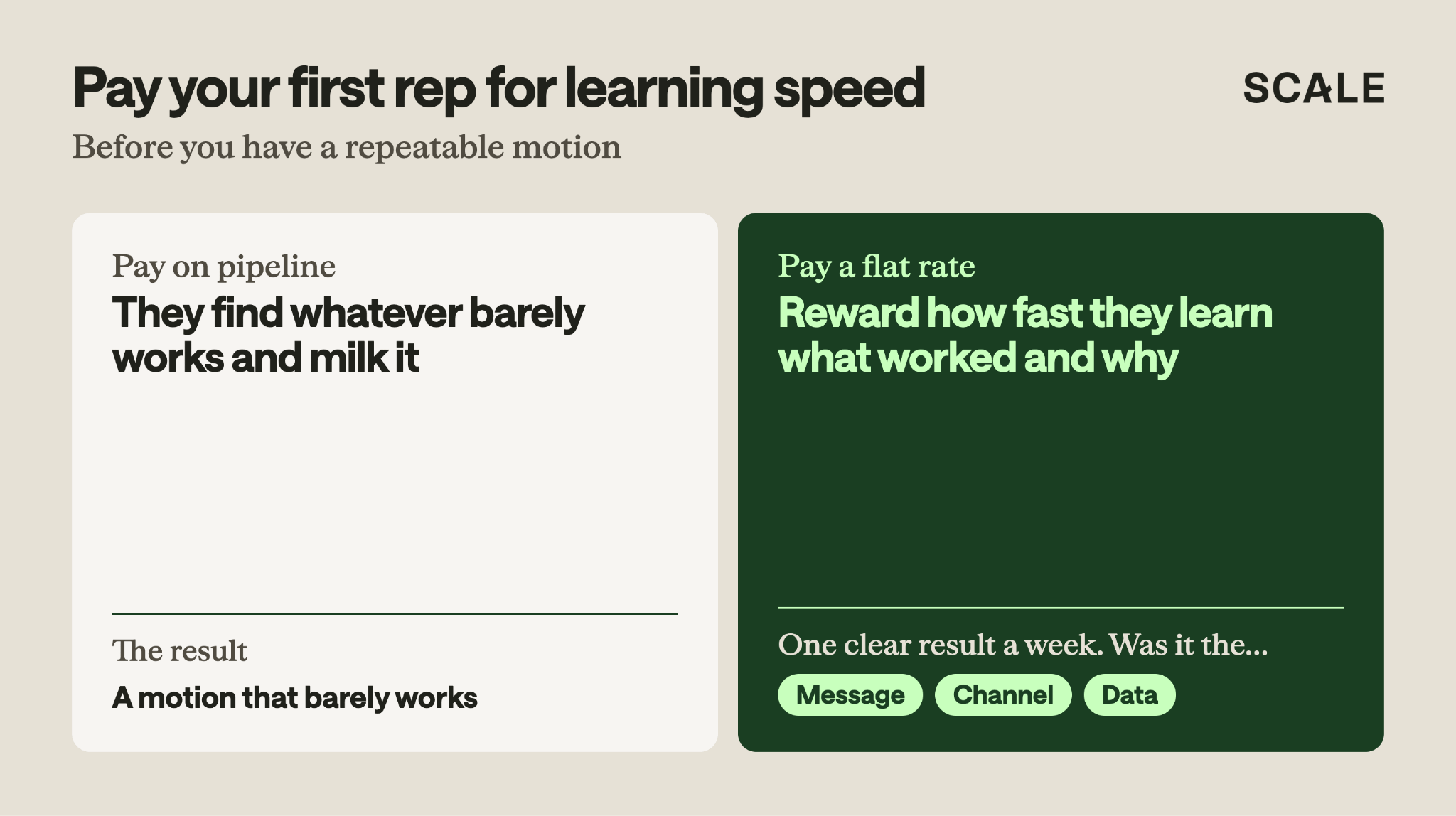
Jordan borrowed from Charlie Munger: “Show me an incentive system, and I’ll show you the outcomes.” Pay an early rep on pipeline before you have a repeatable motion, and they’ll find whatever barely works and milk it. Pay a flat rate instead and reward how fast they can say whether an experiment worked and why. AI can draft 50 tests for your reps to run. Aim for one clear result a week: was it the message, the channel, or the data?
Speaking of Charlie Munger, here’s a little bonus lesson derived from NOT killing WWII pilots:
In practice
Jordan walked through a cold email from a drone intelligence company. It closed a deal worth more than $1 million with a Fortune 5 brand, with no sales call.
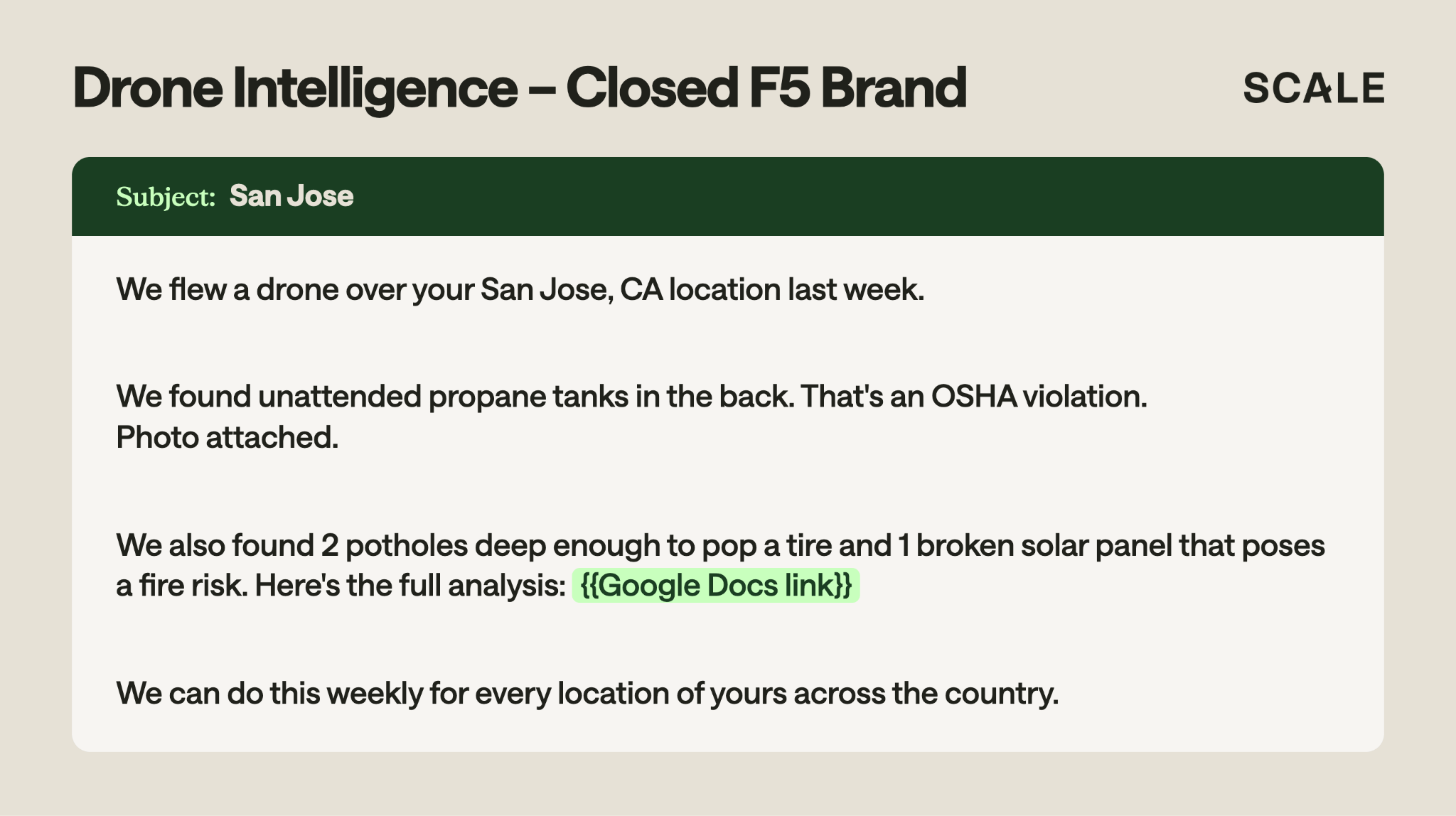
1. It opens with findings from the prospect’s own site. At their San Jose location last week: unattended propane tanks out back (an OSHA violation, photo attached), two potholes deep enough to pop a tire, and a broken solar panel posing a fire risk. The full site analysis is attached.
2. The email was just the final step in the process. First, the company flew a drone over the site, ran the footage through AI, and turned it into findings the prospect could act on.
3. The ask is an offer: “We can do this weekly for every location of yours across the country.” There’s no “let’s meet” and no paragraph about the company.
As Jordan put it, this is what product-led growth was supposed to do: “It was intended to provide value ahead of time. You don’t have to speak with a sales rep.”
Takeaways
A few more memorable lines from Jordan:
“All you’re doing is you’re selling a conversation.” The best way to think about every outbound message.
“It’s always best to improve what’s working.” Go deeper on the channel that already works before you chase a new one.
“No reaction from your competitors is going to out-message you.” What you get once you’ve built a system that understands your customer’s problems.
For founders, this is good news. One narrow segment, the data only you have, and the discipline to send something useful before you ask for anything will carry you further than a bigger SDR team.
The full session is here. You can follow Jordan’s writing at edge.blueprintgtm.com.
Craig Rosenberg is the Chief Platform Officer at Scale Venture Partners, where he works with portfolio companies on GTM strategy and execution. He was the co-founder of TOPO, which was acquired by Gartner, and the host of The Transaction podcast.
#5 is underrated. Paying a first rep on pipeline before the motion is repeatable rewards milking whatever barely works. Paying for learning speed, with one clear result a week, is a much better way to find what works.